

Building friendships across borders: schools look ahead to Erasmus+ 2027/28
School leaders came together in Hampshire to explore how Erasmus+ could create new opportunities for students and staff to learn, travel and build lasting relationships with schools across Europe.
Schools from across Hampshire came together this week to explore how the return of Erasmus+ could open up new opportunities for students and staff to learn, travel and build relationships with schools across Europe.
On Monday 12 October, Global School Exchanges brought school leaders together at Horndean Technology College for our UK Schools Without Borders: In Europe & Beyond event.
The meeting explored a simple question: how can we give more young people and educators meaningful opportunities to connect with the world beyond their own school?
And by the end of the afternoon, the enthusiasm in the room was clear.
Several schools are now keen to explore joining the proposed Global School Exchanges Erasmus+ Mobility Consortium, with the aim of creating funded opportunities for students and staff to travel to Europe during the 2027/28 academic year.
FRIENDSHIPS ACROSS BORDERS
More than a school trip
Much of the discussion naturally focused on Erasmus+ and the opportunities it could create. But some of the most powerful conversations were about why international experiences matter in the first place.
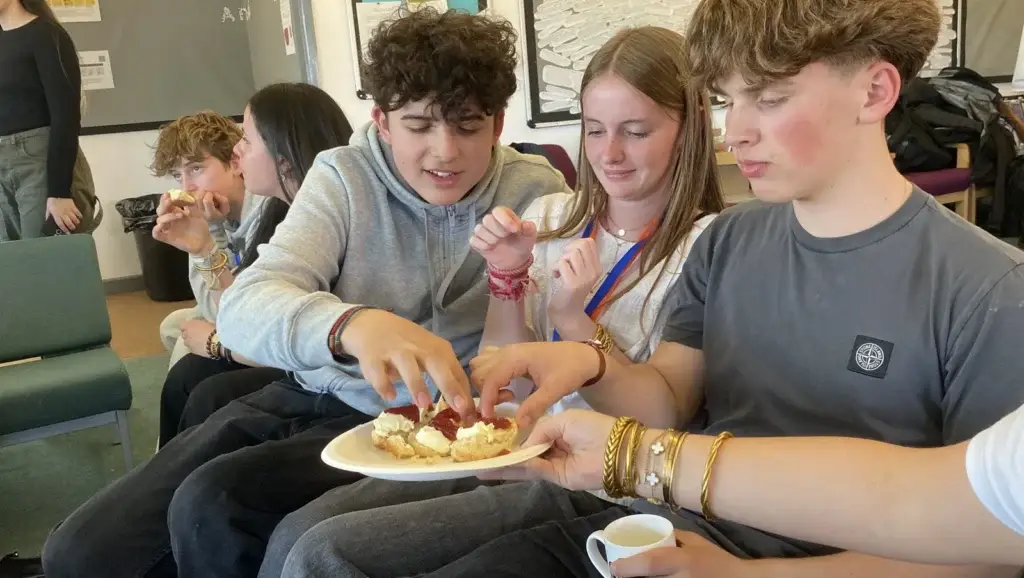
Schools talked about what happens when young people from different countries actually meet one another: sitting in lessons together, talking over lunch, discovering similarities and differences, and forming friendships that would never have existed otherwise.
Julie Summerfield reflected on the importance of this at a time when division can so often dominate the conversation:
“In a time of division, we are encouraging our young people to appreciate other countries and cultures by interacting with schools across the world. A photo can’t capture how great it is to see students experiencing this, making friends across borders, which is why we do this. Our schools interacting with visiting groups across the world.”
Julie Summerfield
Headteacher, Horndean Technology College
That really gets to the heart of what Global School Exchanges is trying to achieve.
International education isn’t simply about visiting another country. It is about creating opportunities for young people to meet, communicate and learn alongside people whose lives may initially seem very different from their own.
RECIPROCAL RELATIONSHIPS
From hosting international students to travelling abroad
For many of the schools in the room, international engagement is already happening.
GSE schools have welcomed visiting students from China, India and Europe into their classrooms, while our wider programme is increasingly creating opportunities for UK students, teachers and school leaders to travel in the other direction.
Our work also includes online school collaboration, educator learning trips and opportunities for teachers and school leaders to learn from international colleagues.
The ambition now is to make those relationships increasingly reciprocal.
Charlie Fisher, Senior Assistant Headteacher at The Mountbatten School, shared that enthusiasm:
“Photos can’t describe the value students and staff get from these exchanges. We are excited to see where we go with this.”
Charlie Fisher
Senior Assistant Headteacher, The Mountbatten School
That sense of excitement was shared across the room.
LOOKING AHEAD
Erasmus+ and 2027/28
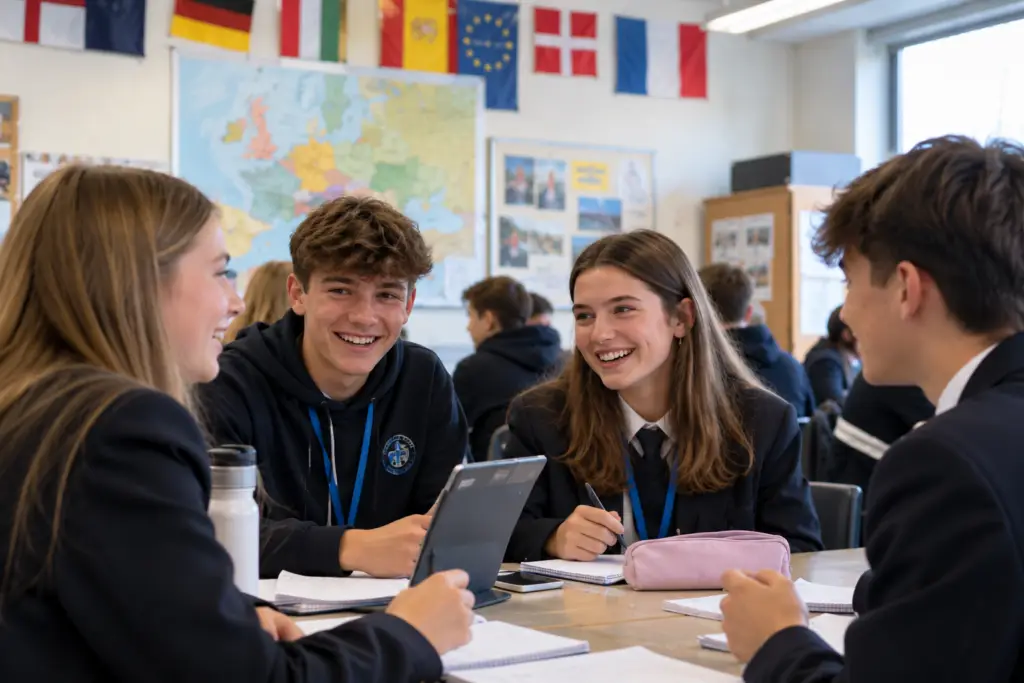
A major focus of the meeting was the opportunity presented by the UK’s return to Erasmus+.
For schools, Key Action 1 (KA1) can support international mobility for students and staff, including school trips and exchanges in Europe, teacher job-shadowing and staff training abroad.
Global School Exchanges intends to apply to become a UK Erasmus+ KA1 Mobility Consortium Coordinator for the 2027/28 programme cycle.
Rather than every school having to navigate the process independently, the proposed consortium would bring participating schools together. GSE would submit and manage the central application and coordinate the resulting mobilities, while schools would help shape the consortium’s priorities and identify the opportunities they would like their students and staff to access. This would be subject to the applicable programme rules, coordinator approval and a successful funding application.
We are now beginning conversations with interested schools about what their 2027/28 plans could look like.
These could include student groups spending time learning alongside pupils at a European partner school, language and cultural exchanges, teacher job-shadowing, professional development visits and longer-term collaboration between schools.
INTERNATIONAL EDUCATION
Building schools without borders
What was particularly encouraging about Monday’s meeting was that the conversation extended well beyond funding.
We discussed hosting students from overseas, creating reciprocal relationships, online collaboration, teacher and school-leader learning trips, and opportunities for UK schools to share their own expertise with educators internationally.
Together, these form part of a much bigger ambition: to help schools make international education an ongoing part of school life rather than an occasional opportunity.
And there may be benefits for staff as well as students.
During the presentation we shared the experience of Jasper Kok, Director of OPO Hof van Twente in the Netherlands, who told us that international opportunities had contributed to improved teacher retention and made his organisation a more attractive employer:
“Teacher retention has improved; teachers love to work in a school that provides travelling opportunities for them and the children.”
Jasper Kok, OPO Hof van Twente
He added that the organisation had become “a more attractive employer”, particularly for younger teachers.
NEXT STEPS
What happens next?
Following such a positive response to the meeting, our next step is to work individually with interested schools to begin shaping potential Erasmus+ activities for 2027/28.
Schools interested in joining the proposed consortium will be asked to identify a School Lead and begin considering their preferred dates, approximate student or staff numbers and educational objectives.
There is plenty of work ahead, and Erasmus+ funding will of course depend on a successful application.
But Monday’s meeting demonstrated something important: there is a real appetite among our schools to reconnect internationally and create more opportunities for young people to experience the world for themselves.
At a time when it can sometimes feel as though countries are becoming more divided, perhaps there has never been a better time to help the next generation build friendships across borders.
START A CONVERSATION
Interested in Erasmus+ opportunities for your school?
If your school would like to explore joining the proposed Global School Exchanges Erasmus+ Mobility Consortium for 2027/28, register your interest with us and our team will be in touch to discuss the next steps.

Sophie Rosenberg
European Director
Global School Exchanges